
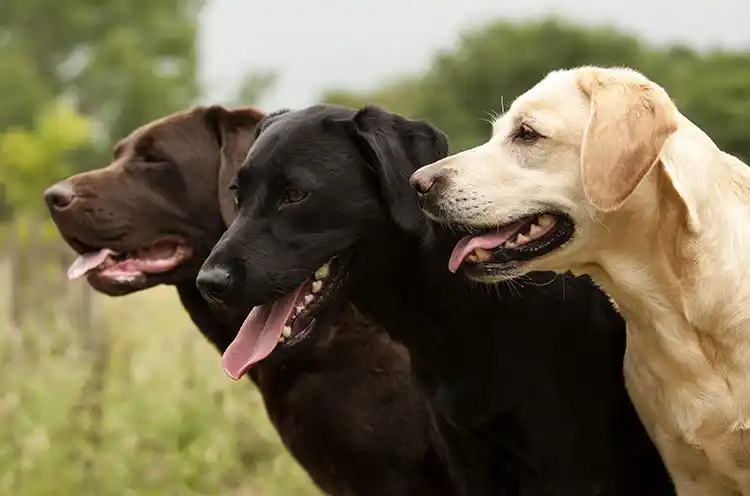
Working Labrador Retriever UK Guide (2026): Training, Health Tests & Buying Advice
This is the honest UK handler's guide to the working Labrador Retriever: what makes a great working lab, the difference between trial lines and estate lines, picking-up dog vs peg dog, the off-switch that defines the breed, the 2026 health-test non-negotiables, the truth about fox red marketing, and what to check before you buy. The most common UK gundog. Also the most variably bred.
Quick answer: what makes a working Labrador Retriever?
- Biddability first, marking ability and soft mouth second
- Match the line to the job: trial for sport, estate for keepering, mix for picking-up
- Engine for picking-up, patience for the peg, never assume both
- Off-switch is the breed: zero to a hundred and back to nothing
- Hips, elbows, eyes, prcd-PRA, CNM, SD2, EIC all clear on both parents
Written by UK gundog handlers and trainers working regularly with working-line Labrador Retrievers in driven shooting, picking-up, peg work, and field-trial environments. Cross-referenced with The Kennel Club's breed standards and British Veterinary Association (BVA) Canine Health Schemes for hip, elbow, and eye testing protocols.
The working Labrador Retriever is the most popular UK gundog, but also the most variably bred. The gap between a properly bred working lab and a "lab from working parents, mate" is the gap between a top-of-the-line shoot dog and a sofa dog with a vague pedigree. This guide covers what separates the two, how trial and estate lines actually differ, the 2026 health tests you cannot skip, and the buyer's checklist that prevents twelve months of regret.
Jump to section
- What makes a great working Labrador?
- Trial lines vs estate lines
- Picking-up dog vs peg dog
- The off-switch
- Health tests (UK 2026)
- Fox red truth
- Training the foundations
- Buying checklist
- FAQs
Twenty guns up a Cotswold valley, January, the kind of morning where the frost is still white on the stubble at eleven o'clock. I am stood halfway up the drive with a black lab sat at my left heel. Pheasants start coming over: high ones, curling on the wind. The guns open up. Three birds down in the first thirty seconds. The dog doesn't move. Doesn't shift a paw.
When the horn goes I send him for the farthest runner first. He has it marked before I have even waved a hand. Goes out, takes a line through a strip of kale, picks the bird clean, brings it back with the head up and the feathers unruffled. Drops it in my palm. Sat in front. Waiting for the next one.
That, in ninety seconds, is why the working Labrador Retriever is still the king of the peg. Not the family-photo lab. Not the chocolate one off the advert. The working lab. Bred for the job, raised for the job, built from the ground up to sit through chaos and deliver under pressure.
What Makes a Great Working Labrador Retriever?
Short answer: a working Labrador Retriever is bred for biddability, marking ability, retrieving, and handler responsiveness. Biddability (the willingness to work with the handler) is the single most important trait. Soft mouth and marking instinct sit on top.
Ask any serious picker-up what makes a great lab and the first word out of their mouth will be biddability. It is not a glamorous word. It doesn't photograph well. But it is the thing that separates a dog you can run on a busy shoot from a dog that will embarrass you in front of the host.
A biddable lab wants to work with you. He takes a hand, takes a whistle, takes correction, and moves on. He doesn't sulk. He doesn't take three runs at a command. He reads the handler, watches the falls, marks with quiet intensity, so when you send him blind a hundred and fifty yards across a river, he is already half-guessed which patch of rushes he will end up in.
The trio that defines a working lab:
- Biddability: willingness to work for the handler, not for himself
- Marking ability: instinctive but needs developing through multiple-retrieve work by age 2
- Soft mouth: mostly genetic. Hard-mouthed labs come from careless breeding.
None of these can be trained into a dog that wasn't bred for them. Buy the lines first.
Trial Lines vs Estate Lines: Choosing Your Working Labrador
Short answer: trial-line Labradors are whippet-thin, fast, hair-trigger, and unforgiving for novice handlers. Estate-line Labradors are chunkier, steadier, more forgiving, and built for full-week shoot work. Most picker-uppers actually run estate lines or estate/trial crosses.
| Feature | Trial Line | Estate Line |
|---|---|---|
| Build | Whippet-thin, light frame, athletic | Chunkier, heavier bone, more substance |
| Speed | Lightning fast, hair-trigger | Slightly slower, steadier |
| Sensitivity | Very high, sharp word can shut them down | Lower, more forgiving of handler error |
| Drive | Enormous, F1-car intensity | High but controllable |
| Stamina across week | Demanding, needs rest days | Built for 6-day shoot weeks without breaking down |
| Best handler | Experienced, fast, technical | All levels including first-time lab owner |
| Best for | Field trials, working tests, peg work for top shots | Picking-up, beating-line work, family lab that also works, keepering |
Neither is better. They are bred for different jobs. A first-time lab buyer with a season of driven days and no trialling ambition should be looking hard at estate lines, or at a trial-influenced estate cross that has the drive without the nervousness.
Ask the breeder directly: "Is this litter from trialling stock, estate stock, or a cross?" If they don't know the answer, or they give you a vague "oh, they're all working", they don't understand their own breeding programme and you should find someone who does.
Picking-Up Dog vs Peg Dog: Two Different Working Labradors
Short answer: a picking-up Labrador needs an engine: stamina, boldness, nose, fitness for 15 to 20 miles a day in cover. A peg dog needs patience: ultra-steady head, absolute self-control, and the temperament to sit through a drive without twitching. Few dogs do both jobs equally well.
Here is where people really get it wrong. They assume any working lab will do any working job. They won't.
The Picking-Up Labrador
A picking-up dog needs a proper engine. He will cover 10 to 20 miles on a busy shoot day. He needs to drive through cover, pin runners, work independently at long range, and keep doing it drive after drive without flagging. You want stamina, boldness, nose, and the kind of fitness that comes from a dog conditioned all summer (see gundog roadwork and pad conditioning). A soft, sofa-dwelling lab will be broken by eleven o'clock.
The Peg Labrador
A peg dog needs one thing above all else: patience. He is going to sit next to a gun for three hours with birds falling everywhere and be expected not to twitch until sent. That is a mental challenge, not a physical one. You want a dog with an ultra-steady head, absolute trust in the handler, and the self-control to watch a live cock pheasant crash down at twenty yards and not move a muscle. The skill is built through gundog steady to shot training from puppyhood. Plenty of cracking picking-up dogs would fail as peg dogs because they cannot sit still.
Know which job you need the dog for and buy accordingly. Ask the breeder which their line produces best. A good breeder will tell you straight.
Why Working Labradors Have the Best Off-Switch
Short answer: a properly bred working Labrador goes from zero to a hundred in under a second, then drops back to nothing the moment the retrieve is delivered. Tail thump, head down, off. This off-switch is what makes the breed liveable in the house and devastating in the field.
The thing that makes a well-bred lab so devastatingly useful, and the reason the breed has dominated the UK shooting field for a century, is the off-switch. A proper working lab goes from zero to a hundred in under a second: gone, in the water, through cover, after a runner, absolute intensity. Then comes back, drops the bird in your hand, and flops down next to the peg like nothing happened. Tail goes thump. Head goes down. He is off.
Ninety seconds later you send him again and he is back to a hundred like a switch has been flipped.
The off-switch is the whole package. It lets the dog live in the house without wrecking it, sleep on the back seat of the truck between drives, and then work like an animal possessed when the whistle goes. A lab without an off-switch (pacing, whining, fidgeting at the peg) is a lab that has been poorly bred, poorly raised, or both. Becoming more common, because some modern trial lines push drive at the cost of temperament. Be careful what you are buying.
Working Labrador Health Tests (UK 2026 Non-Negotiables)
Short answer: hips, elbows, current eye certificate, plus DNA tests for prcd-PRA, CNM, SD2, and EIC. All on both parents. The Labrador is one of the most tested breeds in the UK; there is no excuse for a breeder not having full paperwork in 2026.
| Test | What it screens | Ideal result |
|---|---|---|
| BVA/KC Hip Score | Hip dysplasia, joint malformation that ends working careers early | Total at or below breed mean (around 10 to 12). Sub-10 is excellent. |
| BVA/KC Elbow Grade | Elbow dysplasia, degenerative joint disease in the front end | Grade 0 on both parents. Non-negotiable. |
| BVA Eye Certificate (annual) | Hereditary cataract, generalised PRA, goniodysgenesis | Current within 12 months on both parents, Unaffected |
| DNA: prcd-PRA | Progressive retinal atrophy, late-onset blindness | Clear, or Clear × Carrier. Never two Carriers. |
| DNA: CNM | Centronuclear Myopathy, muscle weakness from 4 to 6 months, career-ending | Clear, or Clear × Carrier. Never two Carriers. |
| DNA: SD2 | Skeletal Dysplasia 2, disproportionate dwarfism | Clear, or Clear × Carrier |
| DNA: EIC | Exercise-Induced Collapse, collapse episodes under extreme exertion | Clear strongly preferred for picking-up work |
Verification rules: original BVA certificates, not screenshots. DNA results on headed lab paper with the dog's KC name and microchip number. Cross-check both parents on the Kennel Club Mate Select database (90 seconds on your phone). If the breeder waves any of this off, "oh they're all fine, I know the line", that is an anecdote, not a test result. Full rundown in the gundog health testing guide.
The Truth About Fox Red Labradors (and Colour Marketing)
Short answer: fox red is not a separate colour or a separate working type. It is a deep shade of yellow that has been in the breed from day one. Fox red Labradors do not work harder, mark better, or run faster. Breeding tells you everything; colour tells you nothing.
The fox red trend has been absurd for years and shows no sign of calming down. Social media drove it, puppy prices jumped, and suddenly every chancer with a yellow bitch and a reddish stud dog was advertising "rare fox red" pups at a thousand quid over the odds.
Let's be clear:
- Fox red is not rare. It is a deep shade of yellow. It has been in the breed from day one.
- Fox red does not affect working ability. It does not make the dog work harder, mark better, or run faster.
- Same with all colour debates. Black vs yellow vs chocolate vs fox red. Colour tells you nothing about what the dog will do in the field. Breeding tells you everything.
A good dog, as the old keepers say, is never a bad colour. Buy the working lines, buy the health tests, buy the temperament, and let the coat colour be whatever it is.
Red flag: if a breeder is leading with colour ("stunning fox reds available") before any mention of hip scores or working parents, you know exactly what sort of breeder you are dealing with. Move on.
Working Labrador Training: The Foundations
Short answer: working Labradors thrive on structure and repetition, the opposite of cockers. Lab training is built on four pillars: stop whistle, recall, steadiness to shot, and water work. Foundations from 8 weeks, live-game work from 10 to 12 months.
Labradors respond to training the way no other working breed quite does. Repetition. Structure. Clear mechanical commands. A Lab will sit through a hundred repetitions of the same drill and turn in a clean performance on the hundredth, where a cocker would have gone home mentally by rep eight.
The four pillars of working Labrador training, in order:
- Gundog stop whistle training: foundation cue, must be reflex-solid before live game
- Gundog recall training in the presence of game: critical for any picking-up dog
- Gundog steady to shot training: the peg-dog skill, hold position through fall and shot
- Gundog water training: confidence and the shake rule for cold water and wildfowling
Summer Conditioning for a Working Labrador
Short answer: 12 weeks of progressive roadwork April to August builds the pads and stamina for a full UK shoot season. Labs come out of the off-season soft. Skip conditioning and the dog limps out of week one.
The fitness side of summer prep is non-negotiable for a dog that will work six days a week from October to January:
- Gundog roadwork and pad conditioning: 12-week schedule, the 7-second hand-on-tarmac heat rule, proprioception for rough ground
- Gundog water training: cold-water confidence, shake rule, blue-green algae safety
Before You Buy a Working Labrador Retriever
Short answer: buy from proven working lines (trial, estate, or genuine cross). Both parents documented for hips, elbows, eyes, prcd-PRA, CNM, SD2, EIC. Watched parents work if possible. Walk away if the breeder leads with colour or can't tell you whether the line is trial or estate.
The buyer's checklist:
- Proven working breeder. Trial or estate pedigree on both sides. Not "lab from working parents."
- Match line to job. Trial line for sport / experienced handler. Estate line for picking-up, peg, or first-time owner.
- Watch the parents work if you can. Marking, recall, retrieve to hand, off-switch.
- Full health paperwork. Hips, elbows, current eye, prcd-PRA, CNM, SD2, EIC. Both parents.
- Ignore colour marketing. Fox red is yellow with a tan. Chocolate is brown. Working ability sits in the pedigree, not the coat.
- No vague "all working" answers. A serious breeder knows their lines.
Ready to Buy a Working Labrador Retriever?
Skip the puppy lottery. Browse working-pedigree Labradors from licensed UK breeders, with full health-test paperwork verified before listings go live:
- View available working Labrador puppies UK (trial and estate lines)
- Compare part-trained Labradors (foundation drills already done)
- Browse fully trained Labradors (steady, marking, picking-up ready)
- Working Labradors at stud for breeders
- Buyer's checklist: timing, prices, red flags
View Available Working Labradors
The Complete UK Gundog Training System
Owning a working Labrador means working through the full training system. Each guide below stacks on the next:
- Gundog stop whistle training: the foundation cue every Labrador needs first
- Gundog steady to shot training: hold position through shot, fall, and distraction (essential for peg work)
- Gundog recall training in the presence of game: reliable recall for picking-up
- Gundog water training: cold-water confidence and the shake rule
- Gundog roadwork and pad conditioning: summer fitness for a 6-day shoot week
FAQs: Working Labrador Retriever
Are Labradors good gundogs?
Quick answer: working-line Labrador Retrievers are the most popular UK gundog for a reason: biddability, marking ability, soft mouth, and the off-switch. Show-line and pet-line Labs are not bred for the field and don't deliver working performance.
A proper working Lab from trial or estate lines will out-work most other breeds at picking-up and peg duties combined. The "lab" in a pet shop or rescue centre is not the same dog and shouldn't be confused with one.
What is the difference between estate and trial Labradors?
Quick answer: trial Labradors are leaner, faster, more sensitive, bred for top-tier field trials. Estate Labradors are chunkier, steadier, more forgiving, bred for full-week shoot work. Trial = sport. Estate = job.
Most picker-uppers and keepers actually run estate lines or estate/trial crosses, because the trial dog is too sharp for casual handling and burns out faster across a long week.
Are fox red Labradors better workers?
Quick answer: no. Fox red is a colour, not a working trait. It is a deep shade of yellow that has been in the breed since the start. Working ability lives in the pedigree, not the coat.
If a breeder is leading with "rare fox red" before any mention of hip scores or working parents, that is colour-marketing not a serious working breeder. Buy the lines, ignore the coat.
How much exercise does a working Labrador need?
Quick answer: 1.5 to 2 hours of structured exercise daily as an adult, plus mental work. Through the off-season, daily roadwork and retrieve drills. Through the season, the shoot day handles it.
Working Labs have higher exercise needs than pet Labs. Skip the conditioning and the dog comes apart in the first month of the season.
What health tests should a working Labrador have?
Quick answer: hip score, elbow grade, current BVA eye certificate, plus DNA tests for prcd-PRA, CNM, SD2, and EIC. All on both parents. Verify against the Kennel Club Mate Select database.
The Labrador is one of the most tested breeds in the UK. There is no excuse for a 2026 breeder without full paperwork. If they don't have it, walk away.
What is the difference between a picking-up dog and a peg dog?
Quick answer: picking-up Labradors need stamina, drive, and 15 to 20 miles of fitness per day. Peg Labradors need patience, steadiness, and the self-control to sit through a drive. Different jobs, different temperaments.
Many cracking picking-up dogs would fail at the peg because they can't sit still. Many excellent peg dogs would struggle on a hard picking-up day because they haven't got the engine. Buy for the job you actually do.
At what age does a working Labrador start working?
Quick answer: foundation work from 8 weeks. Retrieve drills from 6 to 9 months. First live-game work from 10 to 12 months once stop whistle and steadiness are reflex-solid. Full picking-up day from around 18 months.
Labs mature mentally faster than HPRs and Spaniels and can be ready for full work earlier. Rush the foundations and you produce a soft-mouthed dog that ignores the whistle on hot scent.
How much does a working Labrador puppy cost UK?
Quick answer: £1,200 to £2,000 for a working-pedigree puppy. £2,500 to £3,800 for part-trained. £4,000 to £6,500+ for fully trained. FTCh-bred trial lines and proven peg-line dogs sit at the top end.
Cheap working Labs are usually not from working lines. Breeders investing in full BVA testing and trial/estate pedigree don't undercut the market. Pay for pedigree once, or pay for problems for ten years.