
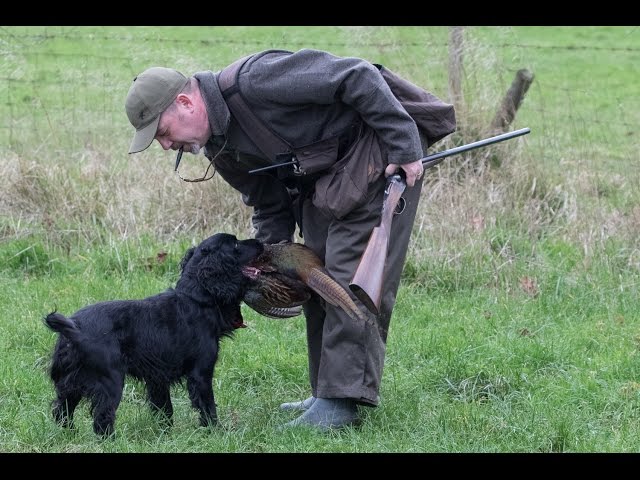
Stop Whistle Training for Gundogs UK: The One Drill That Actually Works
This is the honest guide to stop whistle training for gundogs in the UK: the one drill that actually works, the common stop whistle mistakes UK handlers make, and the step-by-step method to build a reflex-level gundog stop whistle that holds on a shoot day. If you want to know how to teach a stop whistle to a gundog, skip the theory and start here.
I will tell you exactly when the stop whistle matters most, and it is not on a training field. It is when your eighteen-month-old Springer has just flushed a hare on a walked-up day and he is three strides into the chase, legs pumping, brain gone, every fibre of him screaming run. You blow one pip on your Acme 210.5 and he sits. Mid-stride. Backside hits the grass like someone cut his strings. The guns look at you. The keeper nods. And you think: that is two years of boring, repetitive, unglamorous graft, and it just saved my dog's life.
Because that hare was heading for the road. And if your dog does not stop when you blow, he is following it.
That is not training theory. That is safety. The stop whistle is not a trick, it is not obedience-class showing off, it is not something you get round to when the dog is "a bit older." It is the single most important command your gundog will ever learn. Everything else, hunting, retrieving, quartering, steadiness, all of it is built on the assumption that you can stop your dog. If you cannot stop him, you cannot control him. And if you cannot control him, he should not be on the shooting field.
Who this guide is for: UK gundog handlers training any working breed, Spaniel, Labrador, HPR, Retriever, who want a reliable stop whistle that holds under real shoot-day pressure. Covers the common mistakes, the food-bowl drill, the outdoor progression, body language, and gear.
Stop Whistle Mistakes UK Handlers Make First
Here is where most people go wrong with stop whistle training for gundogs, and I mean most. Ninety per cent of the handlers I see at training days are blowing the stop whistle at the wrong moment. They wait until the dog is already on its way back, or already slowing down, or already looking at them, and then they blow. The dog sits. Handler thinks "brilliant, he has got it." No. He has not got it. He was coming back anyway. You just added a soundtrack.
That is the anticipation mistake. You are blowing the whistle when the dog is already doing what you want. Which means on the day it matters, when the dog is running away from you, locked onto a bird or a rabbit, completely committed, that whistle means nothing. Because you have never actually taught the dog to stop when it does not want to. You have taught it to sit when it was going to sit anyway.
And then there is the nagging whistle. Pip. Pip pip. Pip pip pip. The dog is twenty yards out, has not responded, so you blow again. And again. Softer, harder, longer, shorter. All you are teaching the dog is that the first whistle does not count. Or the second. Maybe the third one is real. Maybe not. The dog has learned that your whistle is background noise, something that happens while it is busy doing something more interesting.
Rule of thumb: one pip, one response. If the dog does not sit, you deal with it. But you do not blow again. We will come to the correction below.
The Food Bowl Drill: How to Teach a Stop Whistle to a Gundog
Right, here is the drill. It is not exciting. It is not clever. It is the most boring thing you will do with your dog this year. And it works better than anything else I have tried in thirty years of training gundogs. If someone asks you how do you teach a stop whistle, this is the answer.
You need: your dog, a food bowl, the dog's dinner, and your whistle. That is it. No dummies, no distractions, no training field. Your kitchen floor will do.
Step 1: Indoor foundation (Week 1)
Put the dog in a sit. Show it the food bowl. Walk three paces away and put the bowl on the ground. The dog will want to move. It might break. If it breaks, pick up the bowl, put the dog back, start again. No drama. No shouting. Just, nope. Back you go.
When the dog holds the sit while you place the bowl, give it a release command and let it eat. Do that for three days. Nothing else. Just the sit, the bowl, the wait, the release. Boring. Essential.
Step 2: Layer the pip (Week 2)
Same setup, but this time, after you have placed the bowl and the dog is holding its sit, blow one sharp pip on your whistle before you give the release. Pip, pause, "get on." The dog eats. What you are doing is layering the whistle pip onto something the dog already understands: sit still, good things happen. The whistle becomes part of the equation. Not a separate command to learn. An addition to a behaviour it has already nailed.
Step 3: Build distance slowly (Week 3 to 4)
Here is where people mess up. They rush it. By the end of the first week they are blowing the whistle from across the garden and expecting the dog to slam into a sit from a full run. No. Do not move on until he is solid at three yards. Then five. Then ten. Do not move on until he is solid at ten yards. I mean rock solid. Backside on the grass before the pip finishes. Every single time. Not eight times out of ten. Every time.
Taking the Gundog Stop Whistle Outside
Once the dog is nailing the food bowl drill indoors, and I mean properly nailing it, not "mostly", you take it outside. Garden first. No distractions. Same setup: dog in a sit, you walk away, you blow the pip, dog holds. Then you start adding movement. Let the dog walk around the garden. Blow the pip. Dog should sit immediately, wherever it is, whatever it is doing.
It will not. Not the first time. And this is where the correction matters.
If you blow that pip and the dog does not sit, does not matter why, does not matter what it was sniffing, does not matter if a squirrel just ran past, you walk to the dog. Calmly. No rushing. You go to where the dog is, you put it into a sit on the spot where it should have stopped, and you leave it there for ten seconds. Then you walk away and carry on.
You do not blow the whistle again. You do not shout. You do not drag the dog back to where you are standing. You go to the dog. You put it where it should be. That is the correction. The dog learns: when the whistle blows, my backside goes down, right here, right now. Not "when I have finished this." Not "in a minute." Now.
Your Body Language on the Stop Whistle
The whistle is half the command. Your body is the other half. At 80 yards the dog sees you before it hears you. Make both say the same thing.
Right: What the Dog Should See
Stand tall
Do not crouch or lean forward. Crouching reads as a recall invite.
Raised hand
Open palm facing the dog. Clean, visible from 100 yards even when the wind kills your whistle.
Still feet
No stepping towards the dog. Moving forward pulls the dog to you, the opposite of what you want.
One pip
Clean and sharp. No trills, no double-tonguing, no hesitation.
Eye contact
Hold it. Do not look away. The dog is reading your face for "released" or "still stopped."
Wrong: What Breaks the Stop
Bending forward
Looks like a recall cue. Dog reads it as "come in", not "sit and hold."
Arms flapping
Panic signals excite the dog. You want calm authority, not chaos.
Walking towards the dog
Mixed message. One half of you says stop, the other half says come here.
Multiple pips
Teaches the dog to wait for repeats. Now the first pip means nothing.
Looking away
To check the guns, to look at the Gun, the dog reads "released" and carries on.
Bottom line: the raised hand plus the pip is the command. At distance, especially on a windy day on the moor, the dog might not hear your whistle clearly. But it can see your hand from a hundred yards. The visual and the whistle need to arrive together, every single time, so the dog has two signals to respond to. Plenty of handlers I know have saved a situation with the raised hand alone when the wind took their whistle.
The Penny-Drop Moment
There is a day, could be week three, could be week eight, depends on the dog, when it clicks. You will be out on a walk, or doing a dummy retrieve, and something will happen. The dog will be running, properly running, focused on something else entirely. You will blow one pip. And the dog will sit. Instantly. No hesitation. No "should I, should not I." Just, boom. Backside on the grass.
That is the penny-drop moment. The dog has gone from "I sit because I have been told to" to "I sit because that is what that sound means." It has become automatic. Reflex, not obedience. And that is what you are after. Because on a shoot day, with birds falling and guns going off and dogs barking and chaos everywhere, obedience breaks. Reflexes do not.
But here is the thing. That moment is not the end. It is the beginning of maintenance. A stop whistle that has been drilled to reflex level can absolutely be undrilled if you get sloppy. If you start blowing the whistle when you do not mean it. If you blow and then let the dog carry on because you are distracted. If you let the nagging whistle creep back in because it is easier than walking to the dog. Every time you let the standard slip, you are teaching the dog that the whistle is negotiable.
Whistle Gear: Standard UK Handler's Kit
Do not overthink the kit. But do not buy rubbish either. These are the whistles on the UK shooting field and the one rule that will save your season.
| Whistle | Pitch and use | Best for |
|---|---|---|
| Acme 210.5 | The standard. Half-tone pitch between the 210 and the 211. Carries well across open ground, sharp enough for a clean single pip. | Most common whistle on the UK shooting field. If you do not know what to buy, buy this. Works for Labradors, most HPRs, and open-ground work. |
| Acme 211.5 | Higher pitch. Cuts through wind better than the 210.5. The higher tone gets attention faster in thick cover. | Spaniel handlers in woodland and hedgerows. Worth trying if your Spaniel zones out in dense cover. |
| The Lanyard Rule | Buy two identical whistles. Same pitch. One round your neck, one in your pocket. | Dogs learn a specific pitch. Lose your whistle on a shoot day without a spare and you are using your voice like a novice. Always carry a backup. |
I have used a 210.5 for twenty-odd years. Some of the Spaniel handlers I pick up with swear by the 211.5, and honestly, either works. The point is not which one you pick. The point is you pick one and you stick with it. Your dog learns that pitch. That exact tone. Swap to a different whistle at a training day because you forgot yours and the dog looks at you like you have started speaking Finnish. They are pitch-specific. So pick your whistle, buy two, and never change.
And for God's sake, keep it in your mouth on a shoot day. Not in your pocket. Not on the lanyard bouncing off your chest. In your mouth, ready. Because the moment you need the stop whistle, you need it now. Not in two seconds after you have fumbled it up from inside your coat. The dog is already gone.
The Non-Negotiable Standard
One pip, one response. Every time. If the dog sits, it gets to carry on working. If it does not sit, you go to the dog and put it there. You do not repeat yourself. You do not negotiate. You do not let it slide because "he was nearly there" or "he was having such a good run." Nearly does not count on a shoot day. Nearly is a dog in the road.
Drill it in April. Drill it in May. Drill it in the garden, on the field, on the moor. Drill it until you are bored of it, and then drill it some more. Because the stop whistle is not something your dog learns once. It is something you both maintain, forever, every session, every day out. The moment you stop being consistent, the dog stops being reliable. And a gundog you cannot stop is a gundog you cannot trust.
Once your stop whistle is rock solid, the next layer is steadiness to shot, then recall in the presence of game. Those two drills both depend on the stop being reliable first.
Looking for a Started Dog With the Foundations Already In?
Save yourself twelve months. Gun Dogs Hub lists started, part-trained, and fully trained dogs from licensed UK breeders and trainers:
- Browse trained gundogs for sale UK
- Read the part-trained gundog meaning guide
- Check the 2026 season buyer's guide for timing
FAQs: Stop Whistle Training for Gundogs UK
How do you teach a gundog the stop whistle?
Start with the Food Bowl Drill indoors. Layer a single sharp pip onto a sit the dog already knows, using a food bowl release as the reward. Do not move outside until the dog sits reflexively at ten yards indoors. Then progress: garden, training field, live game. One pip, one response. No repeats, no nagging.
What is the best whistle for stop whistle training UK?
The Acme 210.5 is the UK standard and what most trainers use. Acme 211.5 is higher-pitched and cuts through wind better, preferred by some Spaniel handlers in thick cover. Pick one, buy two identical whistles (one on the lanyard, one in the pocket) and never switch pitch: dogs learn the specific tone.
How long does it take to train a stop whistle on a gundog?
Four to eight weeks of daily short sessions gets most dogs to reflex-level response. Labradors and biddable breeds can click in three weeks. Strong-minded Spaniels, Cockers, and HPRs often take six to ten weeks. The key is progression: indoor foundation, garden work, training field, distractions, live game, in that order. Rush it and you rebuild later.
Why does my gundog ignore the stop whistle?
Three common causes: (1) you only ever blow when the dog is already stopping, so the whistle means nothing under pressure; (2) you nag with multiple pips, training the dog that the first pip is optional; (3) you do not correct. If the dog does not sit on the first pip, walk to the dog, place it in the sit on the spot where it should have stopped, and hold it there. Never repeat the whistle.
Should I use a whistle or a voice command to stop my gundog?
Both, but the whistle is primary. At distance on a windy moor or through cover, your voice does not carry reliably. A sharp whistle pip does. Train both but teach the whistle first and make it the reflex cue. Your voice is backup.
Can I teach the stop whistle to an older gundog?
Yes, but expect it to take longer than with a young dog. An older dog with years of ignoring whistles or hearing nagging pips has habits to unlearn. Start from scratch with the Food Bowl Drill indoors and build up. Four months is realistic for a previously-ignored adult dog.
What is the one pip rule?
One sharp pip means stop and sit, instantly. You blow it once. If the dog responds, it carries on working. If it does not respond, you walk to the dog and place it in the sit on the spot where it should have stopped. You never blow the whistle a second time. Repeat blows teach the dog that the first pip is negotiable.
How do I correct a gundog that does not stop on the whistle?
Walk calmly to the dog, no shouting, no dragging. Place the dog in a sit on the spot where it should have stopped on the pip. Hold it there for ten seconds. Walk away and carry on. Never blow the whistle a second time. Never drag the dog back to where you were standing, that teaches it that the stop is wherever you are, not wherever the pip caught it.
Does body language matter for the stop whistle?
Yes, massively. At 80 yards the dog sees you before it hears you. Stand tall, raise an open palm towards the dog, keep your feet still, hold eye contact, blow one clean pip. Bending forward, flapping arms, walking towards the dog, or looking away all break the stop. The whistle and the body language must agree.
When should I start stop whistle training on a puppy?
Introduce sit and short indoor whistle layering from 16 weeks. Build distance through the first year. Do not expect reflex-level reliability until the dog is 12 to 18 months old and has been through proper outdoor distraction work. Rushing creates a half-trained dog that ignores the whistle on a shoot day.