
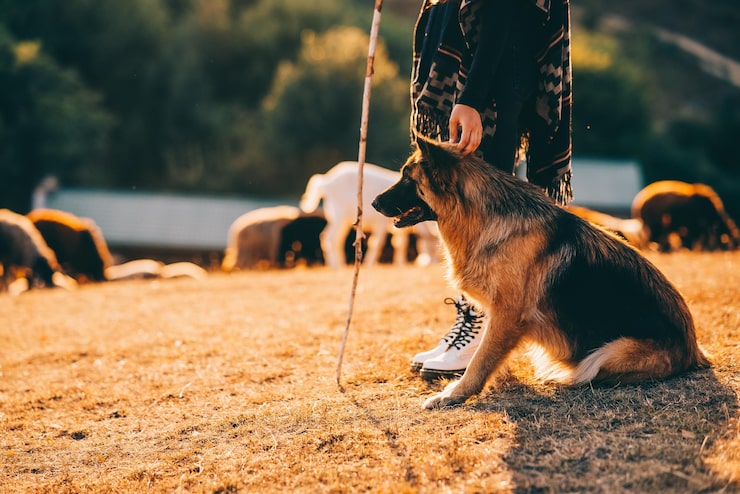
Gundog Recall Training: How to Get a Reliable Recall in the Presence of Game
This is the honest UK handler's guide to gundog recall training: why recall fails in the presence of game, the adrenaline threshold explained, how to use a check cord to back up the whistle, and the stop-first tactic that saves dogs from themselves. How to train a gundog recall off game is one of the most searched questions in UK working dog circles, and one of the most botched.
Quick answer: how to train a gundog to recall off game. Four things, in order:
- Understand the adrenaline threshold. Above a certain arousal level the dog physically cannot process the whistle. Train below the threshold and push it higher over weeks.
- Use a 10 to 15 metre check cord. Back up every whistle with reality until the dog recalls before the cord goes tight.
- Stop first, recall second. Break chase momentum with one sharp pip on the stop whistle. Recall only once the dog is stationary.
- Trade up. Liver, tripe, or a special-reserve skin dummy. Make coming back worth more than the chase.
The silence is the worst part. You blow the recall whistle, three clean pips, the way you've done it a thousand times in the garden, and nothing happens. The dog doesn't turn. Doesn't flick an ear. Doesn't acknowledge you exist. It is fifty yards out, locked onto a running cock pheasant, legs pumping, nose down, and the whistle in your mouth might as well be a kazoo. You blow again. Nothing. You shout the dog's name. Nothing. The dog disappears into the far hedge and you are left standing there with a slack lead in one hand and your dignity in the other, while the keeper stares at you from the next peg like you've just let off a firework in church.
We've all seen it. The bird drops, the dog's eyes glaze over, and suddenly it's developed selective deafness. You are whistling "come back" and the dog is hearing "good luck, catch him if you can." That is not a recall problem. That is a respect problem. And if you don't fix it on the training ground, it will fix you on the shooting field.
A dog you cannot call off game is a dog that will eventually get itself killed or kicked off a shoot. That is not dramatic. That is the reality. A dog chasing a bird across a road. A dog running through a line of guns. A dog disappearing onto a neighbouring farm and causing havoc with livestock, which under UK law is a criminal offence covered by the Dogs (Protection of Livestock) Act 1953 and the Countryside Code. The recall is not a suggestion, and a shoot day is not a negotiation. If your dog only comes back when there's nothing better to do, stay in the car. You aren't hunting; you're a bystander to a chase.
Why Gundog Recall Fails on Game (The Adrenaline Threshold Explained)
Short answer: when a dog crosses its adrenaline threshold the thinking brain shuts down and instinct takes over. It is not stubbornness, it is neurochemistry. Your job is to train below the threshold and push it higher over weeks.
Here's something most handlers don't understand, and it changes everything once you do. When a dog hits a certain level of arousal, the red mist, the chase drive, whatever you want to call it, it physically cannot process your whistle. This is not stubbornness. It is neurochemistry. The adrenaline has flooded the dog's system, the thinking brain has shut down, and the instinct brain has taken over. You could blow a foghorn and the dog wouldn't register it.
That is the adrenaline threshold. Every dog has one. Some are higher: your steady old Labradors, your biddable bitches with a calm temperament. Some are terrifyingly low: the hot-blooded young Springer that goes from zero to red-lining in the time it takes a pigeon to break cover.
Your job is twofold. First: know where your dog's threshold is. Watch it. Learn the signs. The body stiffens. The ears go forward and lock. The tail goes rigid or starts whipping. The dog stops checking in with you and starts fixating on the source of excitement. That is the dog approaching the line. If you are going to get it back, you need to act before it crosses over. After that, you are a spectator.
Second: train below the threshold. Always. Every exercise, every scenario, every dummy thrown near game, keep the dog below the line where it can still hear you. Exciting enough to be realistic, calm enough for the brain to function. Push the threshold higher over weeks and months, not in a single session.
How to Use a Check Cord for Gundog Recall Training
Short answer: a 10 to 15 metre lightweight cord attached to a flat collar, trailing on the ground. Work the dog near low-level distractions, blow the stop whistle first, then the recall. If the dog ignores either, step on the cord. The chase ends. You recall calmly. No yanking. No punishment.
You don't train recall on a live shoot. I shouldn't have to say that, but I'm going to. You don't take an untested dog onto a field full of running birds and hope for the best. You train it on a 15-metre trailing cord, in a controlled environment, with scent and distractions that you control.
The Check Cord Setup
| Stage | Method |
|---|---|
| The Gear | 10 to 15 metre cord, lightweight, attached to a flat collar (not a slip lead, you need it to hold without tightening). Let it trail on the ground. Do not hold the end unless you need to. The dog should forget it is there. |
| The Scenario | Work the dog near low-level distractions first: a cold rabbit skin pegged in the ground, a wing dummy in rough grass. Let the dog hunt. When it locks onto the distraction, blow the stop whistle first, then recall. If it ignores the whistle, step on the cord. Dead stop. |
| The Correction | The cord stops the momentum. That is all. No yanking, no jerking, no punishment. The dog hits the end of the cord, the chase is over, you calmly recall. The lesson: the whistle is backed up by reality. Ignoring it doesn't work. |
| The Fade | When the dog is responding to the whistle before the cord goes tight, consistently, across multiple sessions, shorten the cord. Then remove it. Only go off-lead near game when the cord has been redundant for at least two weeks. |
The check cord is the hand of God. When the dog ignores the whistle, and it will, the first few times near game scent, the cord is there. Not to punish. Not to yank the dog off its feet. Just to stop the forward momentum. The chase ends. The dog hits the end of the cord, the adrenaline breaks, the thinking brain re-engages, and you recall calmly. The dog comes back because the alternative, the chase, didn't work. That is the lesson. Not "don't chase." That is too abstract for a dog. The lesson is: "chasing doesn't get you anywhere, but coming back does."
Stop First, Recall Second: The Tactic That Breaks the Chase
Short answer: do not blow the recall when a dog is mid-chase. Blow the stop whistle instead. One sharp pip. Hand up. Wait three seconds. Then recall from the sit. Stopping is easier than reversing for a dog over threshold.
Sometimes you don't call them back. You "hup" them where they are. The gundog stop whistle training, one sharp pip, backside on the grass, is often a better first response than the recall when a dog is mid-charge. Stopping momentum is easier than reversing it. The dog is running at full tilt, adrenaline red-lining. Asking it to stop is one action: freeze. Asking it to recall is three actions: stop, turn, come back. Under pressure, simpler wins.
| Step | Action |
|---|---|
| 1 | Dog is mid-chase, locked onto game, moving away from you. Do NOT blow the recall whistle. The dog is over threshold, the recall is noise. |
| 2 | Blow the stop whistle. One sharp pip. Hand up. The stop command is simpler, more deeply drilled, and asks less of the dog: just stop moving. Easier to obey than "turn around and come back." |
| 3 | Dog stops. Adrenaline breaks. The thinking brain re-engages. Wait three seconds. Let the dog settle into the sit. Let the red mist clear. |
| 4 | Now blow the recall. The dog is stationary, calm enough to hear you, and the physical act of turning and running back is much easier from a standstill than from a flat-out sprint. |
Critical rule: this only works if the stop whistle is 100% solid. If there is even a five per cent chance the dog ignores the stop whistle near game, you are not ready. Go back to the stop whistle drills and make it reflex before you test it near birds.
High-Value Rewards: The Trade That Fixes Recall Problems
Short answer: if you are asking a dog to leave hot game scent for a dry biscuit, you will lose every time. Near game, upgrade to liver, tripe, heart, or a special-reserve skin dummy the dog only sees in this context.
If a dog is going to leave a fresh scent to come back to you, the paycheck at your feet has to be worth it. This is where most people fail. They recall the dog, the dog comes back, and what does it get? A dry biscuit and a pat on the head. Meanwhile, the thing it left behind, the hot, fresh, intoxicating scent of a running bird, was the most exciting experience of its week. You are asking the dog to trade a steak dinner for a Rich Tea biscuit. No wonder it chooses the bird.
Stop using boring rewards near game. When you are training recall in the presence of scent (rabbit skins pegged out, cold game, distraction piles), the reward for coming back needs to be enormous. Liver. Heart. Tripe. A favourite skin dummy that it only ever sees in this context. Something that makes the dog think: "coming back to the handler is better than the chase." You are not bribing the dog. You are changing the equation. Making the right choice feel better than the wrong one.
Proofing: How to Train a Dog to Recall Off Game (The Final Phase)
Short answer: cold distractions first, warm distractions second, new locations third. Only unclip the cord when the dog has held through all three across multiple sessions.
Once the check cord is redundant and the dog is recalling off cold distractions, you start proofing. Distraction piles, old rabbit skins, cold pigeon, a frozen partridge if you've got one from last season. Peg them in the ground so the dog can't pick them up. Let the dog hunt through and around them. Blow the stop. Blow the recall. The dog has to leave the scent and come back to you.
Then you move to warm distractions. A fresh skin. A recently shot bird, pegged down. The scent is stronger, the temptation is bigger, the adrenaline is higher. Same drill. Stop, recall, reward. If the dog fails, check cord goes back on. No shame in that. Better to go backwards in training than forwards into disaster on a shoot day.
And in 2026 this matters more than it ever has. With the increase in public access across rural land, professional dog walkers running packs through farmland, families hiking with off-lead pets, a bulletproof recall near game is a legal and social necessity, not just a sporting one. A dog that chases livestock is a dead dog (both the Kennel Club and DEFRA publish guidance on this). A dog that runs across a public footpath onto a road is a dead dog. A dog that harasses wildlife in the wrong place at the wrong time can land you a criminal prosecution. The stakes are higher than a ruined drive. The recall is not optional any more. It is survival.
You earn the right to work off-lead near game. Earn it. Prove it on the cord. Prove it on cold distractions. Prove it on warm distractions. Prove it in new locations with new scents and new pressures. Only then, when you know, not hope, that the dog will turn on the whistle no matter what's in front of it, do you unclip the cord and trust it. Because trust, in this game, is built on a fifteen-metre line and a thousand boring repetitions. Not on faith.
Skip the Training. Get a Dog With the Recall Already Drilled.
Not every handler has six months to layer recall onto drive. If the 2026 season is closer than you want to admit, buy a dog that already has the work done:
- Browse trained Labradors and trained Springer Spaniels with reliable recall already drilled
- Read the buy trained gundog UK 2026 guide for timing and red flags
- Understand what you are paying for: the part-trained gundog meaning guide
- Layer the two partner drills: gundog stop whistle training and gundog steady to shot training
FAQs: Gundog Recall Training
Why won't my gundog come back when chasing a bird?
Quick answer: the dog has crossed its adrenaline threshold. The thinking brain is offline and the instinct brain cannot process the whistle.
This is neurochemistry, not disobedience. Training below the threshold on a check cord, then slowly pushing the threshold higher over weeks, is the only reliable fix. Blowing a louder whistle does not work. Shouting does not work. The cord does.
What is a check cord in gundog training?
Quick answer: a 10 to 15 metre lightweight cord attached to a flat collar, trailing on the ground while the dog works. It backs up the whistle with physical reality when the dog tries to ignore it.
Used correctly it is not punishment. It stops momentum. The dog hits the end of the cord, the chase ends, adrenaline drops, you recall calmly. Fade it out only when the dog is responding to the whistle before the cord goes tight.
At what age should gundog recall training start?
Quick answer: from 8 to 12 weeks with basic name recognition and puppy-level recall in the garden. Recall on live game work starts from 10 to 12 months once stop whistle and steadiness are solid.
Rushing recall-on-game training before the foundation drills (sit, stop whistle, steadiness) are rock solid produces a dog that learns to ignore the whistle under pressure. That is a twelve-month setback.
How do I train a gundog to recall off game?
Quick answer: check cord plus stop-first tactic plus high-value reward. Work near cold distractions first, progress to warm distractions, proof across multiple new locations before unclipping the cord.
Never test an untested recall on live birds. Build it under controlled conditions with pegged distraction piles, scale the difficulty in stages, and only trust it off-lead when the cord has been redundant for two weeks across multiple sessions.
How long does it take to train a reliable recall on a gundog?
Quick answer: six to twelve months for reliable recall off game. Garden recall develops in weeks; recall under live-game pressure takes months of layered proofing.
Labradors and biddable retrievers often reach reliable off-game recall in six to eight months. High-drive Spaniels, Cockers and HPRs commonly take ten to twelve months of consistent check-cord work.
Can you fix a gundog that ignores the recall whistle?
Quick answer: yes, but expect to rebuild from the garden. Back onto the cord, lower-level distractions, retrain the pattern before returning to live game.
An adult dog that has learned to ignore the whistle under pressure has wired in the habit. Undoing it takes roughly three times longer than teaching a clean-slate young dog. No shame in going backwards; real shame in taking an unrecallable dog onto a shoot.
Is it legal to let a dog chase wildlife or livestock in the UK?
Quick answer: no. Livestock worrying is a criminal offence under the Dogs (Protection of Livestock) Act 1953. Farmers are legally entitled to shoot a dog worrying livestock in many circumstances.
Under the Countryside Code and the Wildlife and Countryside Act 1981, disturbing nesting birds, harassing deer, or chasing livestock can all result in prosecution. A bulletproof recall is a legal necessity, not just a sporting courtesy.
What is the difference between recall and stop whistle?
Quick answer: the recall (three pips) asks the dog to turn and come back. The stop whistle (one pip) asks the dog to sit where it is. On game, stop is usually the better first command.
Stopping momentum is simpler than reversing it. The dog can hear a single pip at higher arousal than three pips, and a sit breaks the chase without demanding the full turn-and-return sequence.