
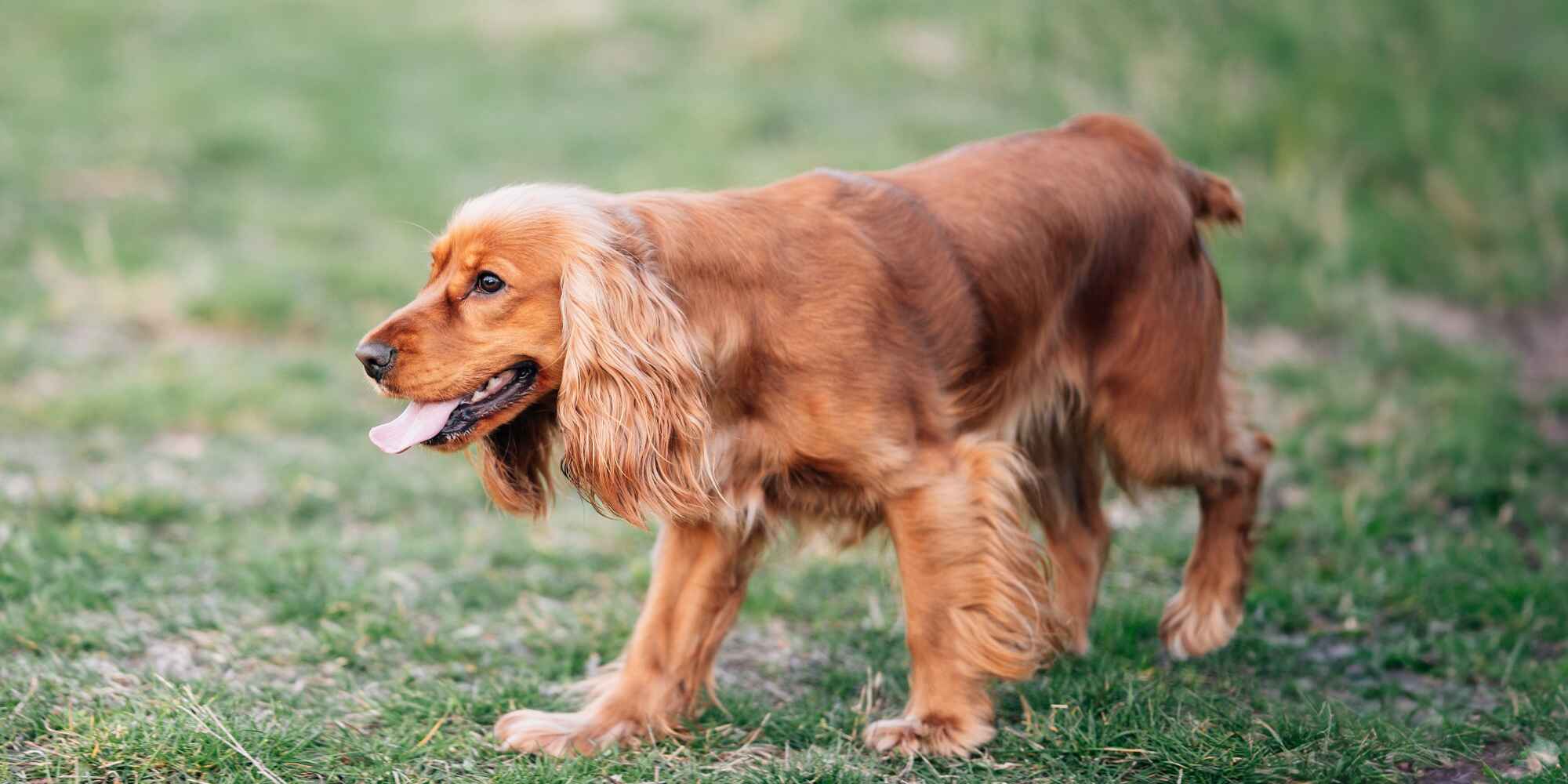
Working Cocker Spaniel Training, Temperament & Buying Guide (UK 2026)
This is the honest UK handler's guide to the working Cocker Spaniel: temperament, the hunting style that wins in cover, training the brain not just the body, working vs show lines, the AMS health-test non-negotiable, and what to check before you buy. The fastest-growing UK working breed, also one of the most misunderstood.
Quick answer: what makes a working Cocker Spaniel?
- Working line, not show line (FTCh pedigree, leaner build, tighter coat)
- Hunts cover not pattern (investigates leaf-by-leaf, gets where springers can't)
- Trained in dialogue, not drills (short sessions, big wins, no nagging)
- AMS clear on both parents (non-negotiable, walk away if missing)
- Bond first, whistle second (works for the handler, not for the cue)
Written by UK gundog handlers and trainers working regularly with working-line Cocker Spaniels in rough-shooting, picking-up, and field-trial environments. Cross-referenced with The Kennel Club's breed standards and British Veterinary Association (BVA) Canine Health Schemes for hip and eye testing protocols.
The working Cocker Spaniel is one of the UK's most effective small gundogs, but also one of the easiest to ruin without proper training and breeding knowledge. This guide covers what makes a working cocker different from the show line, the brain-led training method that suits the breed, the 2026 health tests you cannot skip (AMS, FN), and the buying checklist that separates working pedigree from cute litter photos.
Jump to section
- What is a working cocker?
- Temperament & character
- Hunting style in cover
- Training a working cocker
- Working vs show line
- Health tests (AMS, FN)
- Buying checklist
- FAQs
Late November, walked-up day on the edge of a Norfolk marsh. Thick old blackthorn hedge, half-collapsed, full of dog's mercury and the sort of brambles that put holes in your plus-twos. My springer-owning mate is trying to push his dog in and the dog is having none of it: too tight, too low, too mean.
Meanwhile my cocker has already vanished. One second she is at my heel. The next there is a flash of liver and white through a hole in the base of the hedge you wouldn't fit a terrier through. Thirty seconds later a cock pheasant clatters out the far side. Gun gets it. Dog appears back through the same hole with the bird in her mouth and that smug, wagging-tail look cockers give you when they have just done something no other breed could have done.
That is the working Cocker Spaniel. Not a small Springer. Not a cocker-poo's athletic cousin. A specialist with a low centre of gravity, a brain of her own, and a hunting style that makes her the best cover dog in the UK when she is bred and trained properly. An absolute nightmare when she isn't.
What Is a Working Cocker Spaniel?
Short answer: a working Cocker Spaniel is a small UK gundog (12 to 14kg, 15 inches at the shoulder) bred for flushing game from heavy cover. Working line is leaner, faster, and more biddable than the show line, with FTCh pedigrees and a tighter coat built for hedgerow and bramble work.
The working Cocker Spaniel is one of two distinct lines under the Kennel Club Cocker Spaniel registration. Working cockers have been bred for over a century specifically for game-finding in dense cover: hedgerows, brambles, kale strips, reedbeds, and the kind of ground bigger spaniels and retrievers cannot physically enter.
The breed is the fastest-growing working gundog on Gun Dogs Hub right now. Why? Because for rough shooters, wildfowlers, one-dog picker-ups, and anyone working tight cover, the working cocker delivers more sport per pound of dog than almost anything else.
Working Cocker Spaniel Temperament: Character, Drive & Bond
Short answer: the working cocker has signature character: cheerful, hard-working, and independent-minded. She thinks. She negotiates. She bonds intensely with one handler and works for the relationship more than the whistle. Get the bond right and she is unbeatable. Get it wrong and she develops selective hearing.
Every breed has a signature. The Labrador has biddability. The Springer has drive. The cocker has character. Handlers who have run the breed for twenty years use that word with a raised eyebrow because it means everything from "cheerful and hard-working" to "made a fool of me in front of twelve guns last Saturday." Both are true. Usually in the same dog.
A cocker thinks. A Lab does what you ask because you asked. A cocker does what you ask because she has weighed it up against what she wants to do, and she has decided, on this occasion, in this cover, with this scent in her nose, that your request is reasonable. Most of the time it is.
The bond, when you get it right, is one of the closest you will have with any working dog. The dog works for the handler, not the whistle: she is tuned into her person, reading the body language, watching the hand, and responding to the relationship rather than the mechanical command.
Get the bond wrong and you have a dog that has decided you are not worth listening to. Selective hearing is a real thing in cockers. Some of it is genetic, most of it is training, and all of it is fixable if you catch it early.
Working Cocker Hunting Style: Why Cockers Excel in Cover
Short answer: the working cocker investigates rather than quarters. She works cover leaf-by-leaf, with a tail that never stops, getting into hedgerows, brambles, and kale where bigger spaniels cannot reach. Reads scent like a book. Best UK gundog for tight cover, pound for pound.
Working Cocker vs Springer: Cover-Work Style Working Cocker (investigative) heavy cover (hedge / bramble / kale) leaf-by-leaf, in & out of cover Springer (windscreen-wiper) open ground / light cover tidy quartering pattern, 25-yard width Cocker investigates cover; springer quarters open ground. Different jobs, different gait patterns.
The signature of a working cocker on scent is the tail. Never stops moving. Not a springer's metronomic side-to-side, a cocker's tail is a separate piece of machinery: small tight circles, flicking up and down, communicating to the handler exactly how hot the line is. You learn to read it in the first season and after that you don't need a dog bell. You watch the tail.
Busy is the word that describes the whole hunting style. A cocker doesn't quarter in the neat windscreen-wiper pattern of a springer. She investigates. Every leaf. Every twig. Every crease in the ground that might hold scent. She goes into the hedge, through the hedge, under the hedge, and back out again. She works a patch of cover like she is reading a book: systematically, thoroughly, and with absolute conviction that the bird is in there somewhere.
It is not as tidy as a springer's pattern and it drives some handlers mad, because at first glance it looks chaotic. It isn't. It is deeply purposeful. A good working cocker in a kale strip or a thick brambly boundary will produce more birds than a springer twice her size, because she gets into places the springer physically can't reach and she works the scent with a patience the springer hasn't got.
For the full breakdown of how the two breeds compare in different ground, read the cocker vs springer comparison guide.
How to Train a Working Cocker Spaniel
Short answer: short sessions, big wins, no nagging. Cockers give their best for 7 reps then get bored and creative. Build dialogue not drills. Praise the right answer, redirect the wrong one. The handlers who succeed treat the cocker as a thinking partner, not a robot to program.
This is the bit that catches Labrador owners out when they come to the breed. You cannot train a cocker the way you train a Lab. You just can't. The software is different.
Labs respond beautifully to repetition, structure, and clear mechanical commands. A Lab will sit through a hundred repetitions of the same drill and still turn in a clean performance on the hundredth. A cocker will give you her absolute best for about seven repetitions, then she is bored, then she is creative, and by rep fifteen she is inventing her own version of the exercise because she reckons it is more interesting than yours.
Train cockers in short sessions. Little and often. Big wins, genuine praise, and put the dog away before she has had a chance to switch off. Don't drill. Don't nag. Build a dialogue. Praise the right answer and redirect (not punish) the wrong one, because a cocker that has been nagged or bullied shuts down in a way that is properly difficult to unwind.
The handlers who thrive with cockers are the ones who find this approach liberating. The handlers who struggle are the ones who want a Lab in a smaller body and can't understand why their training regime isn't producing a robot.
The four pillars of working cocker training, in order:
- Gundog stop whistle training: foundation cue, must be reflex-solid before live game
- Gundog recall training in the presence of game: critical for an investigative hunter
- Gundog steady to shot training: hold position through flush and shot
- Gundog water training: confidence work for wildfowling-capable cockers
Working Cocker Spaniel Size & Field Advantage
Short answer: 12 to 14kg, 15 inches at the shoulder. Will carry a full-grown cock pheasant 100 yards across plough without breaking stride. Soft mouth, clean delivery, fits in a car footwell. The size advantage is exactly why she gets into cover bigger dogs cannot.
Don't let the size fool anyone. A decent working cocker weighs 12 to 14kg, stands fifteen inches at the shoulder, and will carry a full-grown cock pheasant a hundred yards across plough without breaking stride. The bite is soft, the mouth is clean, the retrieve is delivered to hand without drama.
She fits in the footwell of the car, sleeps under the seat on the journey home, and gets out at the other end ready to do another day. For the rough shooter, the wildfowler, the one-dog picker-up, or anyone who doesn't want to dedicate half the kitchen to a full-size retriever, the working cocker is hard to beat.
She goes where a bigger dog can't. She costs less to feed, travels easier, and doesn't take up the back row of seats when you have got kit, cartridges, and a guest gun to move around.
Working vs Show Cocker Spaniel: Key Differences
Short answer: the working Cocker Spaniel is leaner, faster, with a tighter coat and a busier eye, bred from FTCh field-trial pedigrees. The show Cocker is blockier, heavier in the skull, longer in the coat, and bred for the ring. Same name, two different breeds.
| Feature | Working Cocker | Show Cocker |
|---|---|---|
| Build | Leaner, lighter, more athletic | Blockier, heavier-boned |
| Coat | Tighter, shorter feathering | Longer, fuller feathering |
| Skull | Refined, more pointed muzzle | Heavier, more domed |
| Eye | Bright, busy, alert | Softer, more melting |
| Drive | High prey drive, hunting focus | Lower drive, conformation focus |
| Pedigree markers | FTCh, working test winners | Show CH, no FTCh |
| Best for | Rough shooting, picking-up, field trials, wildfowling in tight cover | Family pet, show ring, casual countryside walks |
A working cocker pedigree will have FTCh names within three generations. The breeder will talk about hunting style, game-finding, and stop whistles rather than coat colour and show wins. If the breeder can't tell you what the parents actually do in the field, you are not looking at working lines.
Working Cocker Health Tests (UK 2026 Non-Negotiables)
Short answer: AMS clear (non-negotiable), FN clear, prcd-PRA clear or carrier, current BVA eye certificate, hip score at or below breed mean. Both parents documented. No paperwork, no purchase.
| Test | What it screens | Ideal result |
|---|---|---|
| BVA/KC Hip Score | Hip dysplasia | Total at or below breed mean (around 12 to 14) |
| BVA Eye Certificate (annual) | Hereditary cataract, goniodysgenesis, retinal dysplasia | Current within 12 months on both parents, Unaffected |
| DNA: AMS (Acral Mutilation Syndrome) | Neurological condition causing pups to self-mutilate their feet | Clear on both parents. NON-NEGOTIABLE. |
| DNA: FN (Familial Nephropathy) | Fatal kidney disease in young adults (death by 2 to 3 years) | Clear, or Clear × Carrier. Never two Carriers. |
| DNA: prcd-PRA | Progressive retinal atrophy, late-onset blindness | Clear, or Clear × Carrier |
| DNA: EIC (where relevant) | Exercise-induced collapse | Clear preferred in hard-working lines |
AMS red flag: Acral Mutilation Syndrome causes affected pups to lose sensation in their feet and chew them raw to the point of needing amputation. The DNA test has been cheap and widely available for years. If the parents have not been tested for AMS, walk away from the litter. No exceptions. Any 2026 cocker breeder without AMS clearance documented either does not know the breed or does not care. Either way, not your breeder.
FN (Familial Nephropathy) is the other one. Affected dogs develop kidney failure in their first two or three years. You raise the pup, train the pup, start working the pup, and then lose them. It is the worst kind of heartbreak and it is testable. Full paperwork rundown in the gundog health testing guide.
Summer Conditioning for a Working Cocker
Short answer: cockers come out of the off-season soft. Twelve weeks of progressive roadwork April to August builds the pads and stamina for a full season in cover. Water work for wildfowling-capable cockers.
A small dog still needs a big summer. The pads, the tendons, and the cardiovascular base all need building before October:
- Gundog roadwork and pad conditioning: 12-week schedule, the 7-second hand-on-tarmac heat rule, proprioception for rough ground
- Gundog water training: confidence in water, the shake rule, blue-green algae safety
Before You Buy a Working Cocker Spaniel
Short answer: proven working pedigree (FTCh in the line), AMS clear and FN clear on both parents in writing, current BVA eye certificate, hip score at or below breed mean, and watched parents work if possible. Walk away from anything missing AMS clearance.
Working cockers are the fastest-growing breed on Gun Dogs Hub right now and there is a reason: when they are right, they are the most rewarding working dog you can own. But "when they are right" is doing heavy lifting in that sentence. The wrong cocker, from the wrong lines, trained by the wrong hand, is a dog that will wear you out inside one season and end up rehomed.
The buyer's checklist:
- Proven working breeder. FTCh in the pedigree, working test winners, working pedigree on both sides
- Watch the parents work if you can. Cover work, recall under distraction, soft mouth on retrieves
- Full health paperwork. AMS clear, FN clear, current BVA eye, hip score, prcd-PRA
- No cute-litter-photo purchases. A pretty pup and "they're working lines, mate" is not a pedigree
- Walk away from missing AMS status. Not negotiable, ever
Ready to Buy a Working Cocker Spaniel?
Skip the puppy lottery. Browse working-pedigree Cocker Spaniels from licensed UK breeders, with AMS and FN clearances verified before listings go live:
- View available working Cocker Spaniels for sale UK (FTCh-line breeders)
- Compare part-trained Cocker Spaniels (foundation drills already done)
- Understand "part-trained": what each tier delivers
- Buyer's checklist: timing, prices, red flags
View Available Working Cockers
The Complete UK Gundog Training System
Owning a working cocker means working through the full training system. Each guide below stacks on the next:
- Gundog stop whistle training: the foundation cue every cocker needs first
- Gundog steady to shot training: hold position through shot, fall, and distraction
- Gundog recall training in the presence of game: critical for an investigative hunter
- Gundog water training: confidence and the shake rule for wildfowling
- Gundog roadwork and pad conditioning: summer fitness for the season
FAQs: Working Cocker Spaniel
Are working Cocker Spaniels good gundogs?
Quick answer: working-line Cocker Spaniels are among the best UK gundogs for tight cover, hedgerows, and small-game work. Their size lets them get where bigger spaniels can't. Show-line Cockers are not bred for the field and are not suitable for serious work.
The working line has been bred for nose, drive, and game-finding for over a century. The show line has been bred for ring conformation. They are now effectively separate breeds. Buy working pedigree if you want a gundog.
Are working Cocker Spaniels good pets?
Quick answer: only with serious daily exercise and mental work. A working cocker in a pet home that does not meet her drive needs becomes destructive, mouthy, or develops obsessive behaviours. Show-line cockers suit pet homes far better.
Working cockers can be lovely with families when their work needs are met. The drive does not switch off because you got home tired. Match the dog to the lifestyle honestly before buying.
How hard are working Cocker Spaniels to train?
Quick answer: not hard, but unforgiving of bad method. Cockers respond to dialogue not drills, short sessions not long, and praise not nagging. Lab-style training breaks them. Handler-led conversational training builds them.
The training challenge is not the dog's intelligence (cockers are brighter than most working breeds) but the handler's flexibility. Bring a Lab method to a cocker and you create a shut-down dog. Bring a partnership method and you get a brilliant one.
What is AMS in Cocker Spaniels?
Quick answer: AMS (Acral Mutilation Syndrome) is a genetic neurological condition in some Cocker Spaniel lines. Affected pups lose sensation in their feet and chew them raw, often requiring amputation. Both parents must be DNA-tested clear before breeding.
The DNA test has been available cheaply for years. Any 2026 working cocker breeder without documented AMS clearance on both parents should be avoided without exception.
What is the difference between a working and show Cocker Spaniel?
Quick answer: the working Cocker is leaner, lighter, faster, with a tighter coat and busier eye bred for the field. The show Cocker is blockier, heavier-boned, with a longer coat bred for the ring. Same registration, two different breeds in practice.
Pedigree-wise, working lines carry FTCh and working test titles. Show lines carry conformation titles. Crossing the two produces neither type cleanly.
How much exercise does a working Cocker Spaniel need?
Quick answer: 1.5 to 2 hours of structured exercise daily as an adult, plus mental work. A bored working cocker is a problem cocker. Off-season conditioning and seasonal work both required.
Working cockers have higher exercise needs than show cockers despite the smaller frame. Daily walks, hunting drills, and water work through the off-season keep the dog mentally satisfied as well as physically fit.
At what age does a working Cocker start working?
Quick answer: foundation work from 8 weeks. Quartering and cover-introduction drills from 6 to 12 months. First live-game work from 10 to 14 months once stop whistle and steadiness are reflex-solid. Full picking-up day from around 18 months.
Cockers mature mentally faster than springers but the live-game introduction timeline is similar: foundations first, game last. Rushing it produces dogs that ignore the whistle on hot scent.
How much does a working Cocker Spaniel cost UK?
Quick answer: £1,000 to £1,800 for a working-pedigree puppy. £2,200 to £3,500 for part-trained. £3,500 to £5,500+ for fully trained. FTCh-bred and field-trial-winning lines sit at the top end.
Cheap working cockers are usually not from working lines. The breeders investing in AMS, FN, and BVA testing don't undercut the market. Pay for pedigree once, or pay for problems for ten years.